Overview
At a glance
Is this game right for my group?
ABG editorial scores on a 1–5 scale.
Harder to teach
High replayability
Highly interactive
Scales well
Deep strategy
More strategic control
How it plays
How does it play?
Invest influence in seven shared powers, maneuver their armies and fleets, and profit from Europe’s shifting balance of power.
Core mechanisms
Key systems that shape the decisions players make.
Area Majority
Compete to have the strongest presence in areas that award control or points.
Alliances
Players can cooperate through temporary or formal partnerships while pursuing victory.
Area Movement
Move pieces between connected regions rather than along individual spaces.
Investment
Commit resources now to improve income, control, or value later.
Events
Triggered events alter the shared state, rules, or available choices.
Read the full game description
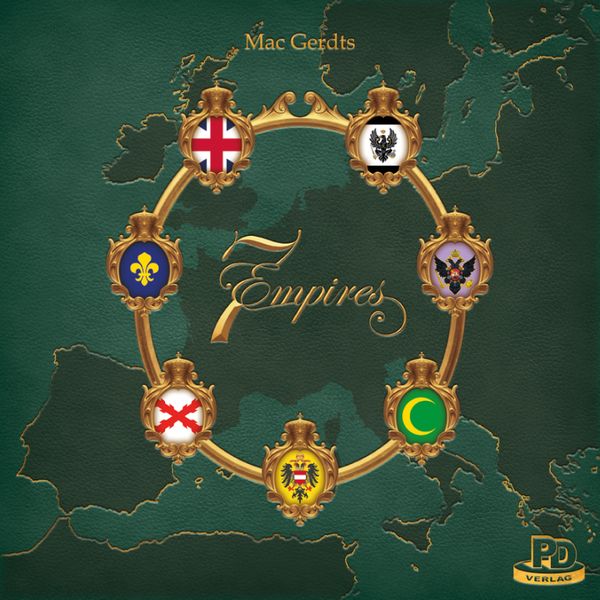
7 Empires is Mac Gerdts’ streamlined return to the shared-power political game. No player owns a country; instead, influence cards determine who may act for Great Britain, France, Prussia, Russia, the Habsburgs, the Ottomans, and Spain at a particular moment. When an empire’s turn arrives, its current leader chooses a compact action that can recruit forces, move armies and fleets, construct cities or palaces, or redirect the military balance. Influence is deliberately unstable, so strengthening a power may hand an even better asset to a rival in the next decade. Event-driven rounds, negotiated alignments, and the relative endgame value of the empires reward long planning, but every move must account for other players’ hidden stakes. The rules are concise; the real complexity comes from reading the table and deciding when an apparently useful alliance has become too dangerous.