Overview
At a glance
Is this game right for my group?
ABG editorial scores on a 1–5 scale.
Harder to teach
High replayability
Highly interactive
Scales well
Deep strategy
More strategic control
How it plays
How does it play?
Lay track across a cloth map, build factories, and turn shared resources into profitable contracts in Martin Wallace’s brisk railway economy.
Core mechanisms
Key systems that shape the decisions players make.
Network and Route Building
Create connected routes that improve reach, delivery, control, or scoring.
Contracts
Complete specific requirements to earn rewards, income, or victory points.
Action Points
Spend a limited allowance of points across several possible actions each turn.
Tile Placement
Place tiles to build a shared or personal spatial arrangement.
Chaining
Link actions or effects so one result enables the next part of a sequence.
Ownership
Claim assets or areas that remain under a player’s control.
See all 9 mechanisms
Read the full game description
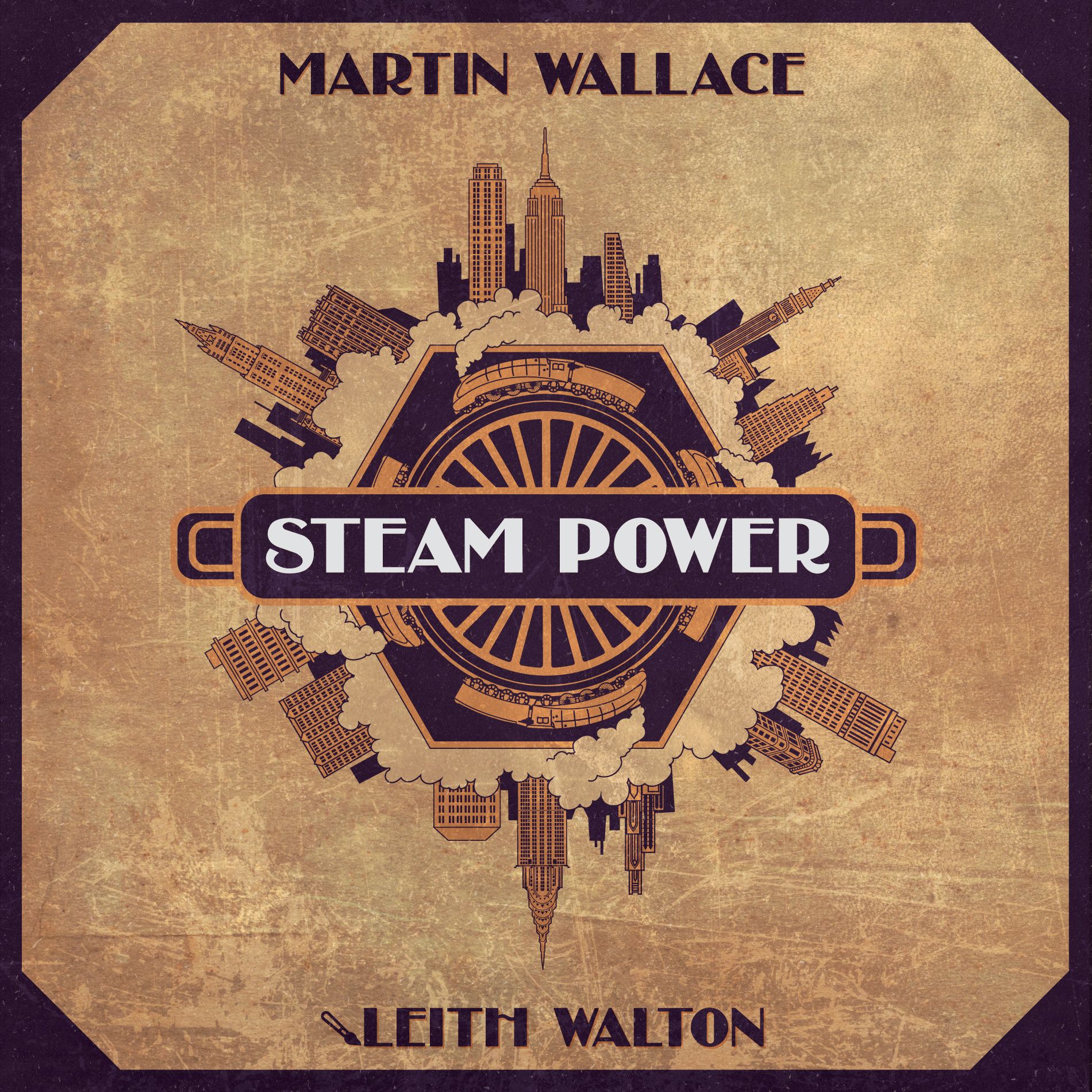
Steam Power condenses Martin Wallace’s network-building instincts into a focused railway game about track ownership, production, and contracts. Each turn grants two actions, chosen freely from laying track, building a factory, fulfilling a contract, taking new contracts, or raising cash. Factories place colored resources into connected cities, but those goods are available to every player. Using a rival’s factory or rail links sends money across the table, so the most efficient route may also enrich an opponent. Contract tiles dictate which colors must reach which destinations, while city connections, factories, completed contracts, and remaining money all matter at the end. The game ends once the required number of contracts has been fulfilled for the player count. Double-sided cloth maps, changing city layouts, and an open resource economy keep the puzzle interactive without the operational weight of a long train game.