Overview
At a glance
Is this game right for my group?
ABG editorial scores on a 1–5 scale.
Harder to teach
High replayability
Highly interactive
Scales well
Deep strategy
More strategic control
How it plays
How does it play?
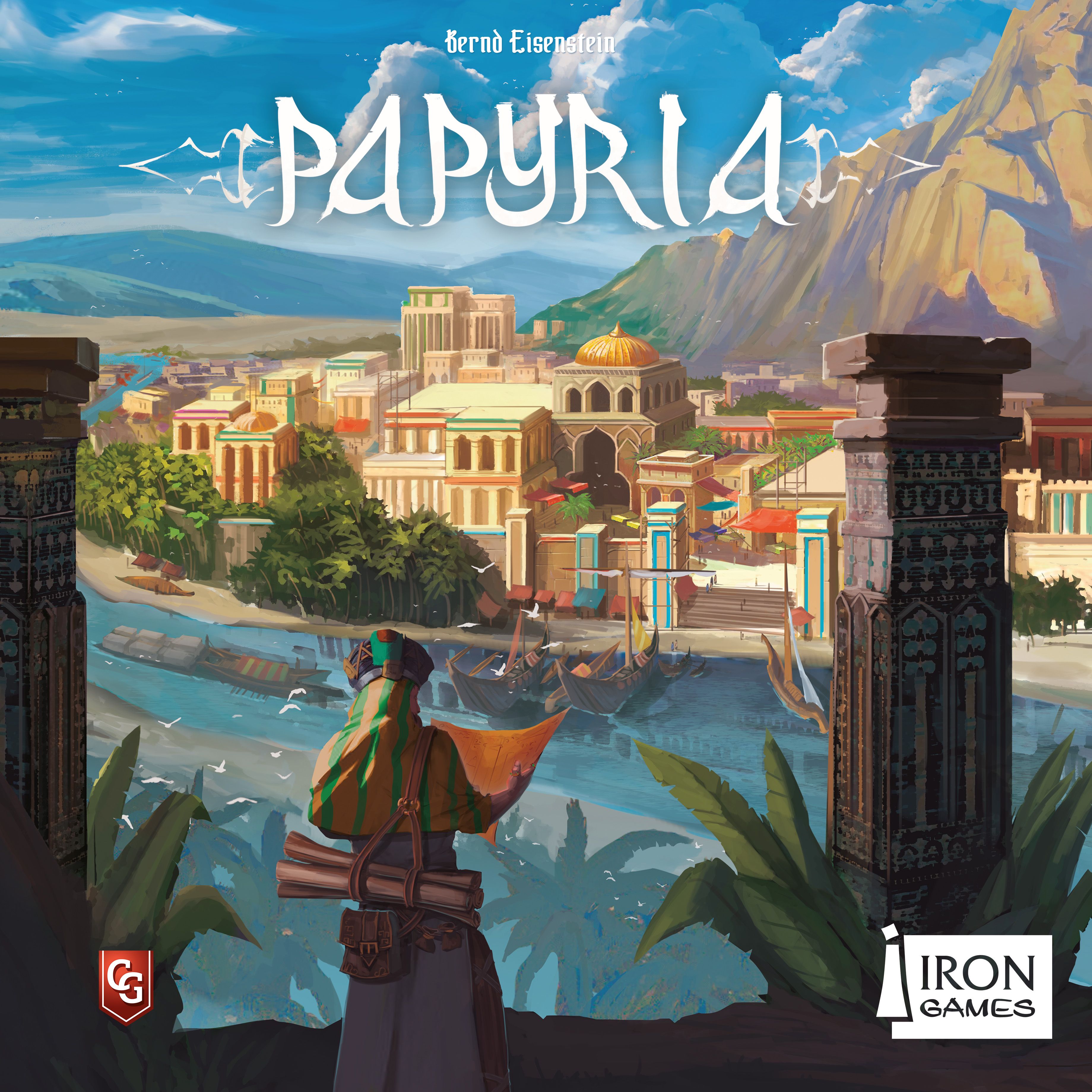
Guide a wanderer and ship through ancient Mesopotamia, build a productive civilization, and make every achievement count through Knowledge.
Core mechanisms
Key systems that shape the decisions players make.
Action Drafting
Choose actions from a shared supply before opponents can claim them.
Tile Placement
Place tiles to build a shared or personal spatial arrangement.
Rondel
Move around a circular action track that limits which actions are currently reachable.
Movement Points
Spend a movement allowance across spaces with different costs.
Solo / Solitaire Game
Provide rules and objectives designed for a single player.
End Game Bonuses
Earn additional points for meeting conditions evaluated when the game ends.
Read the full game description
Papyria is a civilization-building strategy game set in Mesopotamia around 1500 BCE. On a turn, a player moves either their wanderer across the land or their ship along the rivers, then performs two of the three actions available at the destination. Those actions place landscape tiles, construct cities, temples, and mines, acquire resources such as lapis and papyrus, and advance the engines that support future growth. A rondel-like movement structure makes position and timing central: the best action combination may require helping an opponent or leaving a valuable region behind. Knowledge is the key scoring constraint. Civilizations can achieve impressive goals, but only accomplishments supported by sufficient Knowledge contribute fully at the end. Papyria includes a dedicated solo mode as well as competitive play for up to four players.