Overview
At a glance
Is this game right for my group?
ABG editorial scores on a 1–5 scale.
Harder to teach
High replayability
Low interaction
Player-count sensitive
Deep strategy
More strategic control
How it plays
How does it play?
Roll three dice each day, route them through an action rondel, gather and craft for survival, prepare for tomorrow’s weather and raids, and complete the island quest before time expires.
Core mechanisms
Key systems that shape the decisions players make.
Dice Rolling
Roll dice to introduce uncertainty into actions, production, movement, or resolution.
Rondel
Move around a circular action track that limits which actions are currently reachable.
Solo / Solitaire Game
Provide rules and objectives designed for a single player.
Storytelling
Create or extend a narrative in response to prompts or game events.
Read the full game description
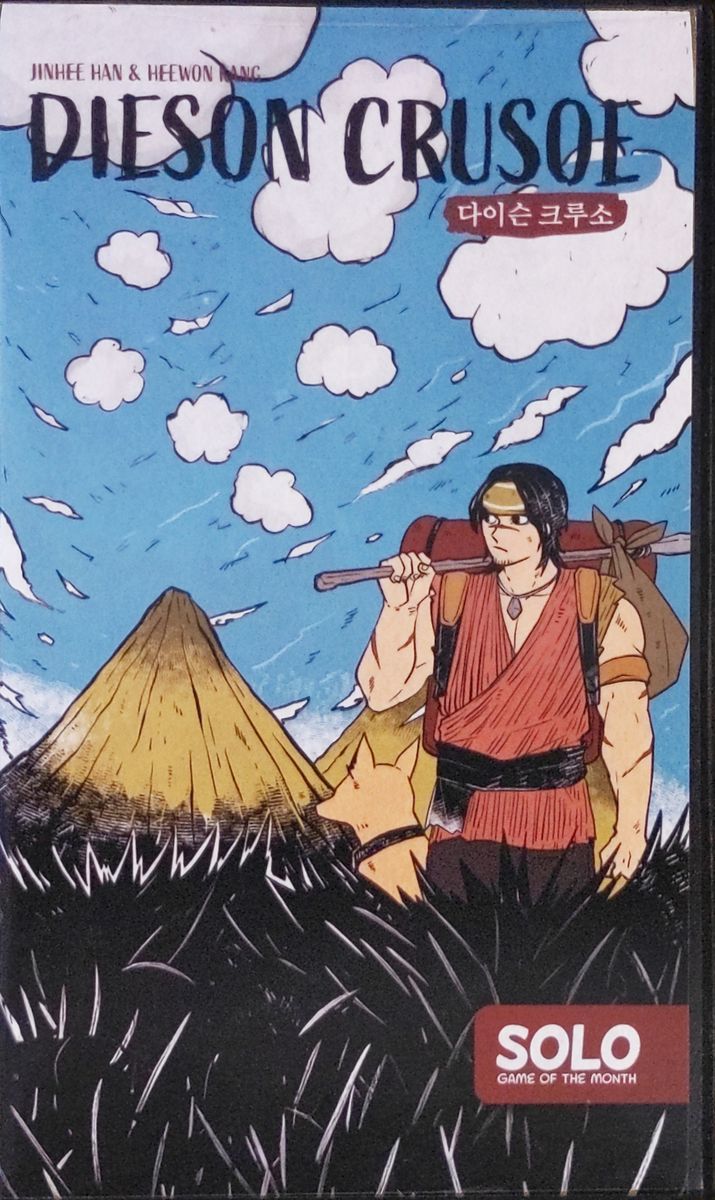
Dieson Crusoe compresses a survival adventure into a focused solo dice-placement puzzle. Each game begins with a chosen character, friend, quest, and a compact island made from two cloth boards. During the morning, three action dice are rolled and ordered; the lowest result also advances the event rondel, revealing the weather or raid pressure that will arrive later. In the afternoon, dice are used one at a time to move around the action rondel, travel, gather food and materials, build tools, or improve the companion relationship. A die’s value affects both the action that can be reached and its strength, so the most efficient sequence today may leave the next day dangerously exposed. Evening resolves hunger, weather, animal attacks, and other consequences before the limited day track advances. Tools, characters, friends, island areas, and five escalating quests create different planning problems, culminating in the challenge of building a raft and escaping. The result is a portable solo game where every die serves both immediate survival and future risk management.