Overview
At a glance
Is this game right for my group?
ABG editorial scores on a 1–5 scale.
Harder to teach
High replayability
Highly interactive
Player-count sensitive
Deep strategy
More strategic control
How it plays
How does it play?
Command the US Marine landing on Peleliu while a card-driven solitaire system reveals hidden Japanese defenses, fire, and counterattacks.
Core mechanisms
Key systems that shape the decisions players make.
Campaign Card Play
Play cards to command conflicts and carry consequences through a campaign.
Hexagon Grid
Use a hexagonal map where each space connects evenly in six directions.
Solo / Solitaire Game
Provide rules and objectives designed for a single player.
Simulation
Model a real or imagined system through detailed cause-and-effect rules.
Read the full game description
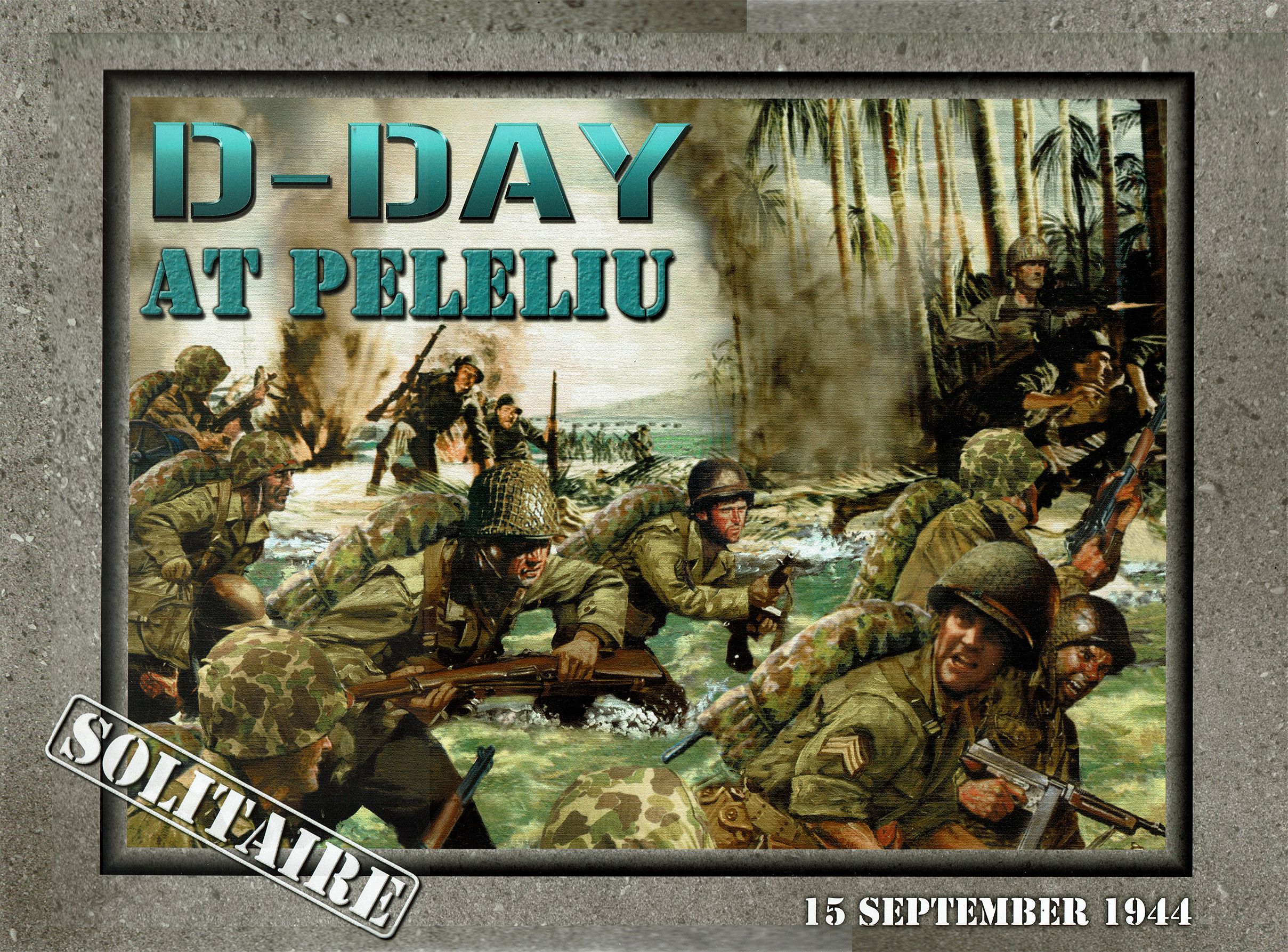
D-Day at Peleliu is John H. Butterfield’s solitaire simulation of the September 1944 assault by the US 1st Marine Division. The player coordinates naval bombardment, beach landings, regimental movement, command posts, combat, and the drive inland across a densely annotated hex map. Japanese positions are initially hidden; cards, fire dots, depth markers, reserves, and special actions make the island behave like a reactive opponent rather than a static puzzle. Units must maintain communication while engineers, tanks, artillery, heroes, and headquarters support an advance through fortified ridges and tunnel networks. Three scenarios cover the landing, Bloody Nose Ridge, and the broader campaign. The second edition’s mounted map and incorporated addenda make it the recommended English version, but this remains a demanding long-form wargame where careful sequencing matters more than quick play.