Overview
At a glance
Is this game right for my group?
ABG editorial scores on a 1–5 scale.
Harder to teach
High replayability
Highly interactive
Player-count sensitive
Deep strategy
More strategic control
How it plays
How does it play?
Command British or Continental forces through twelve American Revolution battles using cards, blocks, terrain, and morale-driven combat.
Core mechanisms
Key systems that shape the decisions players make.
Campaign Card Play
Play cards to command conflicts and carry consequences through a campaign.
Dice Rolling
Roll dice to introduce uncertainty into actions, production, movement, or resolution.
Hand Management
Time and sequence a limited hand of cards to preserve future options.
Modular Board
Build the play area from interchangeable sections that vary between games.
Scenario Campaign
Play linked or standalone scenarios with their own setup, objectives, and consequences.
Hexagon Grid
Use a hexagonal map where each space connects evenly in six directions.
Read the full game description
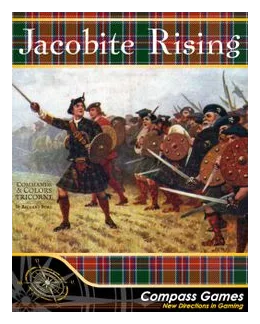
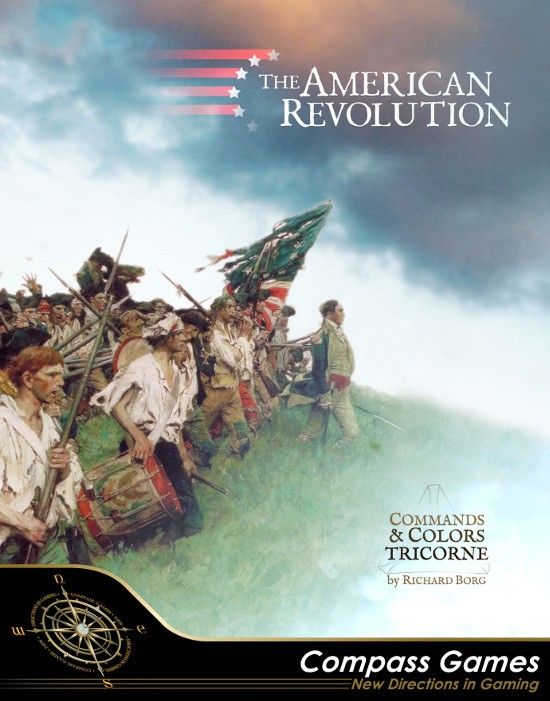
Commands & Colors Tricorne: The American Revolution adapts Richard Borg’s accessible command system to linear warfare in the late eighteenth century. Two players deploy labeled wooden blocks on a modular hex battlefield and use command cards to activate units in the left, center, or right sections. Combat dice resolve fire and melee, but morale is the defining pressure: retreats can force units to rout even when casualties are limited. Separate British and Continental combat decks reflect different doctrine, while leaders, artillery, cavalry, terrain, and scenario-specific objectives add historical texture. Twelve battles range from Bunker Hill and Long Island through Cowpens and Eutaw Springs. The rules remain approachable for a tactical wargame, yet hand management, formation, flanks, and the risk of broken units make each order consequential.