Overview
At a glance
Is this game right for my group?
ABG editorial scores on a 1–5 scale.
Harder to teach
High replayability
Highly interactive
Scales well
Deep strategy
More strategic control
How it plays
How does it play?
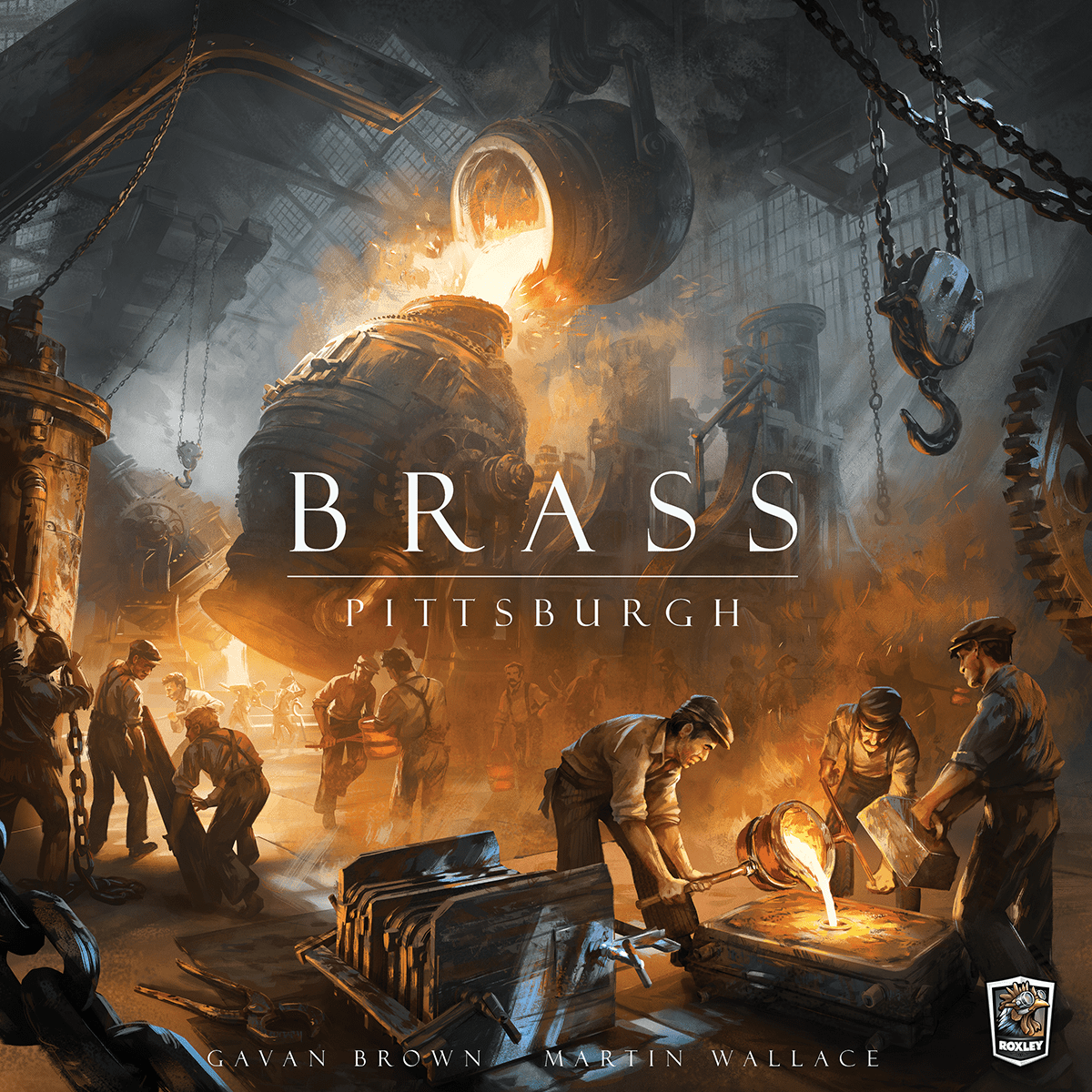
Forge railways, pipelines, steel, oil, and whiskey into an industrial network built to dominate America’s Gilded Age.
Core mechanisms
Key systems that shape the decisions players make.
Multi-Use Cards
Use the same card in different ways, making each play a trade-off.
Hand Management
Time and sequence a limited hand of cards to preserve future options.
Market
Buy and sell through a shared supply whose availability or prices can change.
Chaining
Link actions or effects so one result enables the next part of a sequence.
Income
Receive recurring resources according to your position, assets, or development.
Loans
Borrow resources now and repay them later, usually with an additional cost.
Read the full game description
Brass: Pittsburgh carries Martin Wallace’s economic network system into the late nineteenth-century Steel Belt. Industrialists use multi-purpose cards to build mills, refineries, breweries, railways, and pipelines, take loans, develop technology, and sell resources into a market shaped by every player. Distributed markets, heavy locomotives, prospecting, and industries for coke, steel, oil, and whiskey create new chains of dependency without abandoning the sharp shared-network play that defines Brass. Money determines turn order, links connect opportunities as well as rivals, and every industry must be timed for the era in which it can flip and score. A dedicated solo mode and a focused two-player map broaden the system while the full table remains intensely interactive.