Overview
At a glance
Is this game right for my group?
ABG editorial scores on a 1–5 scale.
Easier to teach
Lower replayability
Highly interactive
Scales well
Light strategy
More strategic control
How it plays
How does it play?
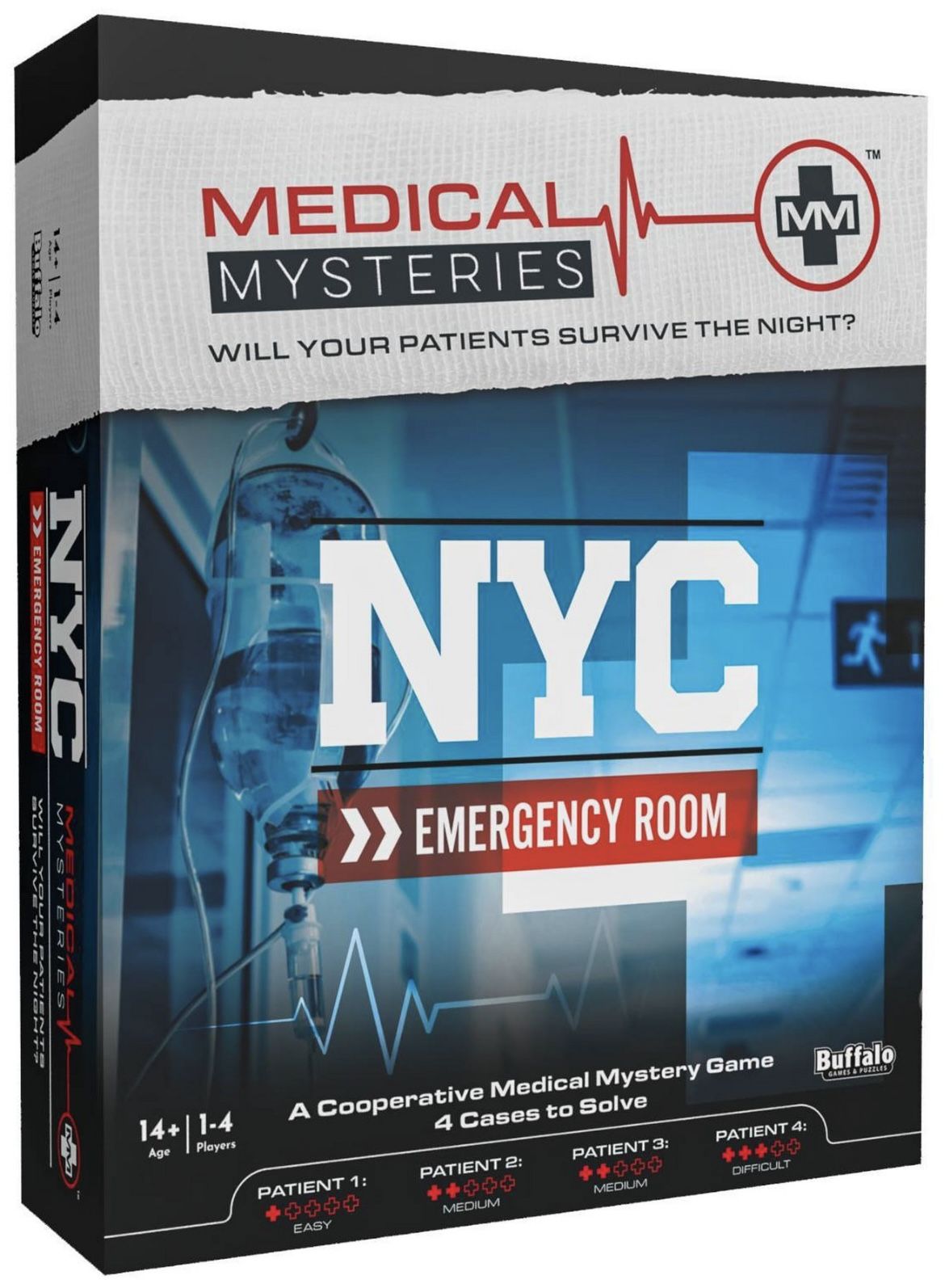
Examine symptoms, order tests, and race the clock to diagnose four emergency-room patients in a cooperative medical mystery.
Core mechanisms
Key systems that shape the decisions players make.
Cooperative Game
Players coordinate their actions toward a shared objective and win or lose together.
Scenario Campaign
Play linked or standalone scenarios with their own setup, objectives, and consequences.
Deduction
Combine clues and exclusions to identify hidden information.
Solo / Solitaire Game
Provide rules and objectives designed for a single player.
Read the full game description
Medical Mysteries: NYC Emergency Room turns clinical diagnosis into a cooperative investigation. Each of four cases begins with a patient file, symptoms, medical history, and a limited amount of time. Players discuss which examinations and laboratory tests are most useful, consult the supplied medical reference material, and spend precious minutes to reveal new information. The team must separate meaningful evidence from plausible distractions, identify the condition, recommend treatment, and justify the final diagnosis. A guided tutorial introduces the case structure before the main scenarios increase in complexity, so no medical knowledge is required. Because every action advances the clock, indiscriminate testing is rarely the best answer; the table must form hypotheses, compare evidence, and decide when it knows enough. The result is a story-led deduction game that feels part escape room, part collaborative case file, and part accessible simulation of emergency medicine.