Overview
At a glance
Is this game right for my group?
ABG editorial scores on a 1–5 scale.
Easier to teach
High replayability
Highly interactive
Scales well
Deep strategy
More strategic control
How it plays
How does it play?
Place influence around a hexagonal Japan, surround castles, rice fields, and temples, and secure the most valuable majority tokens before the board closes.
Core mechanisms
Key systems that shape the decisions players make.
Area Majority
Compete to have the strongest presence in areas that award control or points.
Set Collection
Gather related items that become more valuable when scored together.
Tile Placement
Place tiles to build a shared or personal spatial arrangement.
Hand Management
Time and sequence a limited hand of cards to preserve future options.
Hexagon Grid
Use a hexagonal map where each space connects evenly in six directions.
Read the full game description
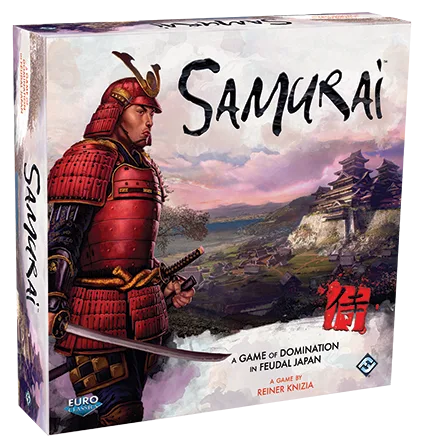
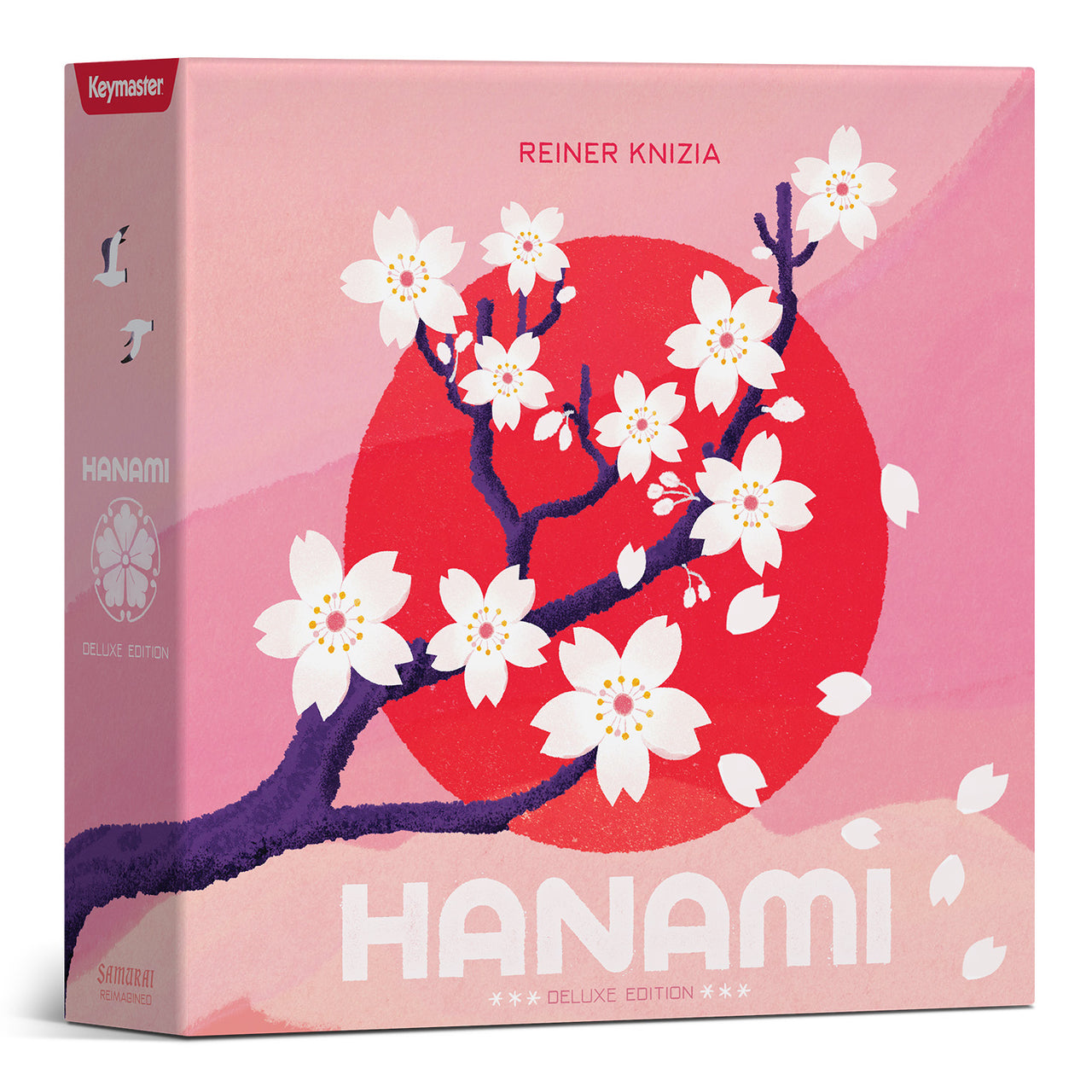
Hanami is Reiner Knizia’s streamlined area-majority contest, reimagining the core system of Samurai on a vivid hexagonal map of Japan. Players place influence tiles next to three kinds of scoring tokens: castles, rice fields, and temples. When a token becomes completely surrounded, the player with the greatest adjacent influence of its type claims it. Flexible samurai and ship tiles contribute across categories, while special tiles can be played quickly or reposition pieces to upset an apparently settled contest. The tension comes from committing just enough strength without revealing every plan. A powerful placement may secure one token but leave the same tiles unable to affect a later region. The game ends when one token type is exhausted or four tokens are removed because of tied influence. Victory first rewards dominance in any category and then compares remaining captures, so a focused strategy can outperform simple accumulation. The Deluxe Edition expands the tactile presentation with larger wooden tokens, an expanded board, and a fitted organizer.