Overview
At a glance
Is this game right for my group?
ABG editorial scores on a 1–5 scale.
Harder to teach
High replayability
Highly interactive
Scales well
Deep strategy
More strategic control
How it plays
How does it play?
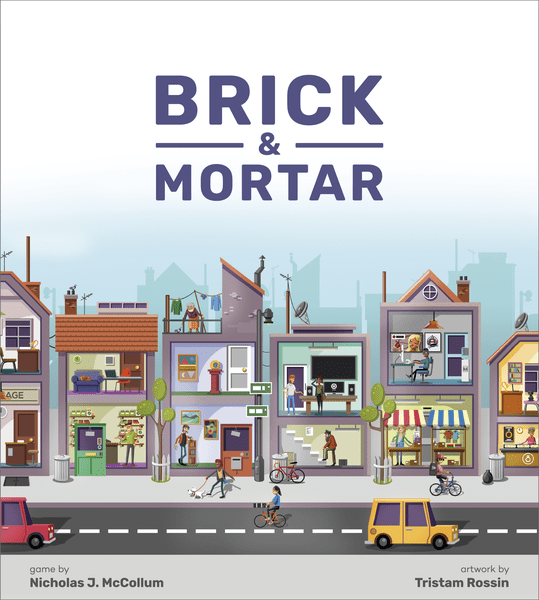
Open unusual storefronts, speculate on goods, shape demand, and undercut rival retailers without collapsing the market you need.
Core mechanisms
Key systems that shape the decisions players make.
Commodity Speculation
Buy or influence goods whose values change before they are sold or scored.
Market
Buy and sell through a shared supply whose availability or prices can change.
Auction: Sealed Bid
Bid against other players to determine who receives an item, action, or priority.
Hand Management
Time and sequence a limited hand of cards to preserve future options.
Read the full game description
Brick & Mortar is a competitive economic game about running a growing collection of specialty stores in a shared, player-driven market. Each round begins with simultaneous planning: owners influence demand, speculate on goods, and decide which products their stores will try to sell. Market resolution turns those hidden choices into changing prices and limited opportunities, so a resource that looks lucrative can become crowded or worthless once rivals reveal their plans. Store cards create distinct incentives and restrictions, encouraging one business to specialize while another pivots between categories. Money can be reinvested in new stores, inventory, and victory-point assets, but cash held too long does not win the game. Because every player both supplies and disturbs the same economy, successful play requires reading competitors as carefully as optimizing a personal engine. The result is a long-form market game with sealed decisions, commodity speculation, and deliberately narrow margins, where undercutting a rival can be valuable even when it reduces immediate profit.